admin
admin


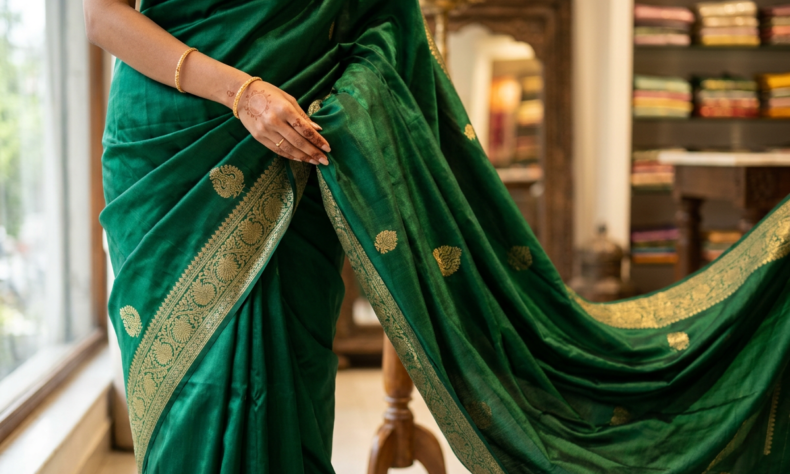
Different Types Best silk for use Fabric
Best Silk Fabric for Sarees
- Mulberry silk → Premium weddings
- Tussar silk → Traditional occasions
- Chiffon silk → Lightweight daily wear
Silk has always been associated with luxury, elegance, and timeless beauty. But here’s something most people don’t realize—not all silk looks the same.
Some silk fabrics are glossy and smooth, while others are textured, matte, or even slightly rough. The variation comes from how the silk is produced, the type of silkworm used, and the weaving technique.
In this complete guide, you’ll learn:
- The most popular types of silk fabric
- How each one looks and feels
- Where each type is best used
- How to choose the perfect silk for your needs
You are also overwhelmed when identifying pure silk or a specific kind of silk fabric, then you are at the right place. Here you will get to know some basic types of silk fabric along with their qualities. So stay tuned up and explore how you can recognize numerous kinds of silk material.
Best Silk for Dresses
- Charmeuse → Party & evening wear
- Crepe silk → Office & formal
- Organza → Layered fashion
Best Silk for Bridal Wear
- Velvet silk → Royal bridal look
- Muga silk → Heritage weddings
- Dupioni silk → Structured lehengas
Best Silk for Summer
- Chiffon silk → Breathable & airy
- Lightweight mulberry silk → Comfortable luxury
Best Silk for Winter
- Velvet silk → Warm & rich
- Eri silk → Cozy & soft
What Determines the Look of Silk Fabric?
Before diving into types, you need to understand why silk looks different.
Key factors:
- Type of silkworm (Mulberry vs wild)
- Weaving technique (tight, loose, twisted)
- Finishing process (polished, raw, dyed)
- Fiber thickness
👉 This is why some silk looks super shiny, while others look earthy or matte.
Silk is the result of silk worm and types of fiber depends on the species of silk worm. There are four main types of silk fiber that are produced out of these species.
Mulberry silk
- Smooth and extremely glossy
- Even texture with no irregularities
- Reflects light beautifully
Texture:
- Ultra-soft and fine
Best For:
- Premium sarees
- Dresses
- Pillowcases
Mulberry silk is considered the highest-quality silk in the world. It has a clean, polished finish that instantly looks expensive.
Visual vibe: Sleek, rich, and elegant
Bombyx mori larvae, which eat mulberry leaves, produce 90% of the world’s silk. This kind of silk is globally famous as Mulberry silk. This grade of silk is the strongest and smoothest. When it comes to length and diameter, a mulberry silk strand is stronger than a piece of steel. It’s also quite good at retaining moisture. This implies that it will not need to be aired out or mildewed.
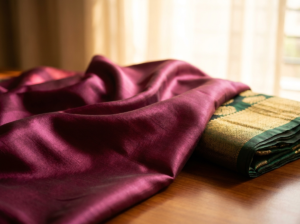
Eri Silk (Soft & Eco-Friendly Look)
The Philosamia ricini silkworm produces Eri silk in India. Villagers cultivate Eri silkworms, which are fed castor leaves, in their homes. It’s also the world’s most environmentally friendly cloth. A combination of cotton and silk makes Eri silk cloth feel and look like silk. Silk items are heirlooms since they are handed down from generation to generation. Contrary to popular belief, this cloth is considered to improve with age rather than depreciate in value.
Appearance:
- Matte finish
- Slightly thick texture
Texture:
- Soft like cotton/wool
Best For:
- Sustainable fashion
- Winter wear
Eri silk is known as “peace silk” because it is produced without harming the silkworm.
👉 Visual vibe: Subtle, warm, minimal
Tussar Silk (Raw & Natural Beauty)
Silk tussah, tussar, and silk shantung are all names for the same fabric, commonly known as tussar. Mulberry silk, on the other hand, is finer and softer. A coppery hue accompanies it. Despite the fact that it’s not highly usable in clothes, it’s a common choice for upholstery.
Appearance:
- Slightly uneven texture
- Natural golden-beige tone
- Less shine than mulberry
Texture:
- Coarse and breathable
Best For:
- Ethnic wear
- Handloom sarees
Tussar silk is made from wild silkworms, giving it a raw, organic look that feels more earthy than polished.
👉 Visual vibe: Rustic, traditional, artistic
Muga Silk (Golden Royal Fabric)
Silk sarees, a traditional garment in India, are commonly have Muga silk. It has a golden hue and is highly long-lasting in nature. It, too, may be handed down from generation to generation like Eri silk.
Appearance:
- Natural golden shine
- Becomes richer with time
Texture:
- Strong and durable
Best For:
- Luxury sarees
- Heritage clothing
Muga silk is one of the rarest silks, mainly produced in India. Its natural golden glow gives it a royal identity.
👉 Visual vibe: Regal, premium, heritage
Types of silk fabrics
Silk fabrics are different from fibers. Fabrics is created out of blends of different fibers. Here are some major types of silk fabrics.
Charmeuse silk
It’s easy to drape charmeuse silk. There are times when people confuse it for satin due to its satin weave. In terms of sheen, charmeuse edges out satin. There are two sides to it: one is glossy, and the other matte. This trait aids in the identification of the material. In addition, this fabric is usable from both sides. Dresses, lingerie, blouses, and scarves are all common applications for this fabric.
Appearance:
- Glossy on one side, matte on the other
- Flowy and reflective
Texture:
- Smooth and slippery
Best For:
- Evening gowns
- Lingerie
Charmeuse silk drapes like liquid, making it perfect for body-hugging outfits.
👉 Visual vibe: Glamorous, shiny, luxurious
Chiffon silk
Due to the usage of twisted yarns, chiffon silk has a little harsh feel while being a delicate and translucent fabric. All colors and patterns are available in chiffon. Flowy, free-fitting clothing is the result of using this fabric. Silk of a medium to lightweight. With a rough texture, it also has some stretch. Evening gowns and bridal gowns are the most popular choices, along with loose-fitting clothing.
Appearance:
- Sheer and transparent
- Soft flowing layers
Texture:
- Slightly grainy but lightweight
Best For:
- Sarees
- Scarves
- Party wear
Chiffon silk creates a delicate and feminine look.
👉 Visual vibe: Soft, dreamy, flowy
Dupion silk
This silk fabric has a nubby feel and a loose plain weave and is medium weight and reversible. Unlike other fabrics, this one doesn’t wrinkle or crease easily. It has a clean appearance and a pleasing feel to it. It has a heft and shine to it. Silk thread that has two distinct hues appears iridescent when worn. All kinds of apparel can create out of it, from formal dresses to coats to wedding gowns.
Appearance:
- Visible irregular threads (slubs)
- Slight sheen
Texture:
- Crisp and stiff
Best For:
- Wedding outfits
- Formal wear
Dupioni silk stands out because of its textured richness.
👉 Visual vibe: Bold, structured, luxurious
Taffeta silk
At some point in your life, you’ve probably come across this content. It’s reversible and features a beautiful across rib pattern. It has nice finish on the surface. It has a rustling and may be soft or stiff depending on its construction. Despite its sturdiness, silk taffeta is pleasant to the touch. You can use it in anything from bridal gowns and cocktail dresses to suits and lingerie. Other uses include draperies, lampshade covers, upholstery and cushion covers.
Appearance:
- Slightly crinkled surface
- Matte finish
Texture:
- Grainy yet soft
Best For:
- Office wear
- Dresses
Crepe silk offers a more modern and structured appearance.
👉 Visual vibe: Minimal, classy, contemporary
Organza Silk (Transparent & Structured)
Appearance:
- Sheer with a slight shine
- Holds shape well
Texture:
- Crisp and lightweight
Best For:
- Bridal wear
- Layered dresses
👉 Visual vibe: Elegant, airy, sophisticated
It is a transparent, lightweight silk fabric with a loose weave that is sturdy and resilient. Silk organza resembles silk gauze in appearance, but it is thicker and stiffer. Fine threads that allow the cloth to be sheer. Creases form readily in this fabric. Overlaying dresses has this material as voluminous layer. This fabric serves as the foundation for embroidered materials as well.
Velvet Silk (Heavy Luxury)
Appearance:
- Deep shine with soft depth
- Rich color intensity
Texture:
- Thick and plush
Best For:
- Winter fashion
- Royal outfits
👉 Visual vibe: Rich, heavy, premium
Raw Silk (Natural & Minimal)
Appearance:
- Matte and slightly rough
- Less processed look
Texture:
- Coarse and stiff
Best For:
- Traditional wear
- Casual ethnic outfits
👉 Visual vibe: Simple, authentic, organic
How to Choose the Right Silk Fabric
Choosing silk depends on your purpose:
✔ For Luxury Look
→ Go for Mulberry or Charmeuse
✔ For Traditional Wear
→ Choose Tussar, Muga, or Raw silk
✔ For Light & Comfortable Outfits
→ Pick Chiffon or Organza
✔ For Premium Heavy Outfits
→ Select Velvet or Dupioni
FAQs
What are the main types of silk fabric?
The main types include Mulberry silk, Tussar silk, Muga silk, Eri silk, Charmeuse, Chiffon, Crepe, Dupioni, Organza, Velvet, and Raw silk.
Which silk fabric is the most expensive?
Mulberry silk and Muga silk are considered the most expensive due to their quality and rarity.
Which silk fabric is best for sarees?
Mulberry, Tussar, and Muga silk are the best choices for sarees depending on the desired look.
How can you tell if silk is real?
Real silk feels soft, has a natural shine, and produces a burnt hair smell when tested (burn test).
Conclusion
Silk is not just one fabric—it’s a family of luxurious materials, each with its own personality.
- Want shine? → Mulberry
- Want tradition? → Tussar
- Want elegance? → Charmeuse
- Want comfort? → Eri
👉 Understanding these differences helps you choose smarter and look more stylish
Beside these there are many other types of silk fabrics. Yet through the above points I hope you understand the difference between some types of silk fabric. Now next time when you buy a silk fabric dress, just ensure to look after these points. Further, You can use these points when buying silk fabric for dresses.
read more articles
luxury fabrics for home styling